
Need help? Call police on 101.
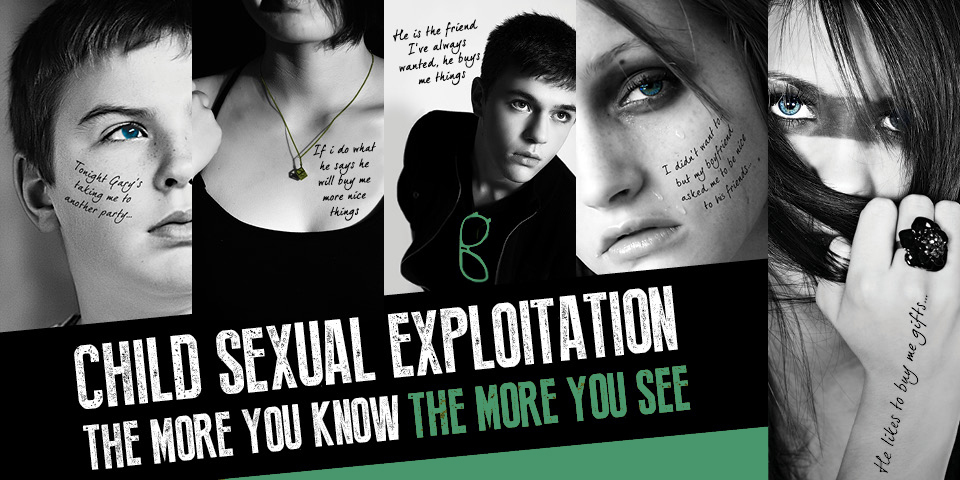
ADVICE FORPARENTS
As a parent or carer it is important to discuss with children the differences between healthy and unhealthy relationships to help highlight potential risks to them.
There are also a number of practical steps you can take to protect children such as:
1) Staying alert to changes in behaviour or any physical signs of abuse
2) Being aware of new, unexplained gifts or possessions
3) Monitor any episodes of staying out late or not returning home
4) Making sure you understand the risks of online grooming and make sure your child knows how to stay safe online
5) Be aware of who your child is friends with and any relationships they may have where there appears to be an imbalance in power
ONLINE SAFETY
CSE doesn’t just happen in person, in can also happen online, so it’s vital you do all you can to keep your children safe while they enjoy using the internet.
1) If they are using social media networks, take a look at their security settings and make sure they are set to ‘Friends only’. That includes comments, posts and photos.
2) Make sure the people they speak to online are ones both you and they know and trust in the real world
3) Explain to them that once a photo is online, it can be easily shared with others
4) Tell them to only post content and photos that they wouldn’t mind sharing with their family
5) Teach your children about the importance of keeping their personal information private and not to share it online
5) Teach your children about the importance of keeping their personal information private and not to share it online
6) Don’t let your children use webcam with people they do not know from the real world, and supervise webcam use if necessary
7) Delete people that make you feel uncomfortable and report suspicious or criminal activity to 101
8) Set up parental controls on all their devices. Visit the NSPCC website for advice on how to do this.
Find out more about the dangers of sexting
TALKING TO YOUR CHILD
Break the ice
Ask them what they use the internet for
Speak to them about who their friends are
Find out what games they play online
Ask
Do they understand how to keep themselves safe online?
Have they ever felt pressured to do something they don’t want to?
Explain
Talk to them about what a healthy relationship is
Nude images or sexual messages are not appropriate and can be shared
Be open and honest with them
Reassure
Let them know you are there for them
Give them options of where to go for support
Further help
Seek help from professionals who can advise you on the steps to take
Visit our help and support section to find out more or visit the NSPCC website which is full of advice on how to keep your child safe online
CONTACT US
In an emergency, always dial 999. To report a concern about CSE, call 101.
Find out where else to go for help and support.
© Copyright 2016 Bedfordshire Police. All rights reserved.
Website designed by Bedfordshire Police Media & Communications.
With thanks to Lancashire Police and Staffordshire County Council for use of artwork